Tuesday, December 19, 2006

Launch of the Scottish BookClub

Ciara McGrath Wrote:
We really enjoyed our first bookclub meeting. It didnt really have much of a structure because there was so few of us, more of a chat really, but it was really interesting to hear other peoples opinions and it helped to see the characters in a different light than we maybe had before.

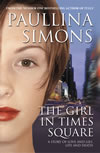
We spoke mostly about The Girl in Times Square because that was the one we had all read. We all really enjoyed this book and were kept interested by the complex relationships between the characters as well as the mystery central to the book. The illness of the main character was handled really well and I liked that she was not turned into an angelic character just because she was ill - her reactions and thoughts were very human. Although she was in a way the 'hero' of the novel, she didnt always make the right decisions or react appropriately. This made her seem a lot more real and I found it easier to sympathise with her as a result. We felt that the book
provided just about everything - mystery, romance, tragedy, scares - we laughed and cried.

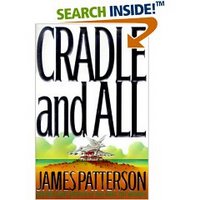
The other book we talked about was Cradle and All. There was much less enthusiasm for this one. Louise found it readable but pretty mediocre. I personally really disliked it. I thought the characterisation was really cliched - particularly the Irish characters - at some points I actually gasped in disbelief at what I was reading! We also found the narrating character really difficult to identify with. She seemed smug and self-absorbed and not at all likeable. I also thought that the relationship between her and the priest from her past was totally unnecessary to the story -it didnt go into enough detail about their growing feelings for each other to add anything to the novel and gave me the impression that it had been tacked on to the edges as an afterthought to add a bit of sensationalism to the already ropey premise. (sorry, rant over...) - it has really put me off reading any more of his books.

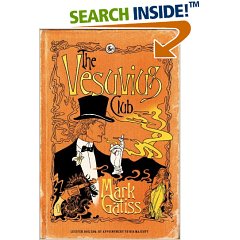
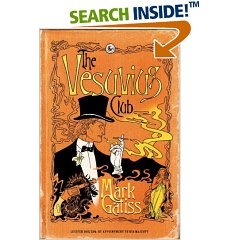
My suggestion for next months read is "The Vesuvius Club" by Mark Gatiss.
I haven't read any of his novels but I went to see him speak about his new novel, the follow-up to this one, last month at Aberdeen University and he was really brilliant. He is one of the minds behind the League of Gentlemen, and has written for Doctor Who as well. Hopefully it should be pretty good :)

Lucifer Box, the hero of the Vesuvius Club, is a portraitist, gentleman and secret agent, a kind of Edwardian James Bond with a generous helping of Sherlock Holmes thrown in for good measure. It’s a cracking romp presented in true Strand magazine style with an appropriately evocative cover and illustrations throughout. Though a self-declared “bit of fluff” the novel has all the necessary elements that fans of such fiction will be hoping for: a suitably convoluted plot involving volcanoes and kidnapped scientists and lashings of pleasing period references. The Vesuvius Club is the first part of a planned trilogy taking the character through different periods, into the 1920s and the 1930s and onwards through the 20th century.
[Image taken from Amazon.co.uk and Review taken from http://www.readysteadybook.com/BookReview.aspx?isbn=0743257057]
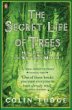

Louise's suggestion is "The Secret Life of Trees" by Colin Tudge. It's a 'celebration of trees" apparently. Sounds pretty interesting.

The central theme of Colin Tudge’s The Secret Life of Trees is variety and the evolution of variety: variety in form, in adaptation, in kinds of dependence – most trees need to cohabit with soil fungi, some need insects, birds or fruit bats to pollinate them and spread their seed, some are parasitic on other trees. Tudge makes the British experience seem truly insular. He writes, for example, about ‘the wondrous Reserva Florestal Adolfo Ducke’, which covers a hundred square kilometres of Amazon rainforest. Two thousand times smaller than Britain, it has forty times as many native trees – 1300 species.
[Image taken from Amazon.co.uk and Review taken from http://www.lrbshop.co.uk/product.php?productid=2296&cat=39&page=1]

Monday, November 27, 2006

Ennis Book Club Festival Update

Hi girls,

Just to let you know that the Ennis Book Club Festival have launched a website: http://www.ennisbookclubfestival.com. It is worth checking out. The event will be held in Ennis, County Clare from March 2nd - 4th 2007. An impressive line-up of speakers have already confirmed.

To read more, click on their press release:
http://www.ennisbookclubfestival.com/press-images/ebcf-press-release.pdf

Or alternatively visit the website above.

Looking forward to Christmas Book Club.

Trish.

Tuesday, November 07, 2006

December Recommended Reads

Hi Everybody,

It was decided at last nights meeting that we would just recommend the three books suggested and everyone reads whatever takes their fancy! That way we'll have loads to discuss at the next meeting which will also be our Christmas bash (mulled wine and pressies). So happy choosing and get reading.....

1) Man's Search for Meaning by Viktor E. Frankl

Man's Search for Meaning by Viktor E. Frankl is among the most influential works of psychiatric literature since Freud. The book begins with a lengthy, austere and deeply moving personal essay about Frankl's imprisonment in Auschwitz and other concentration camps for five years and his struggle during this time to find reasons to live.

The second part of the book, called "Logotherapy in a Nutshell" describes the psychotherapeutic method that Frankl pioneered as a result of his experiences in the concentration camps. Freud believed that sexual instincts and urges were the driving force of humanity's life; Frankl, by contrast, believes that man's deepest desire is to search for meaning and purpose. Therefore, Frankl's logotherapy is much more compatible with western religions than Freudian psychotherapy. This is a fascinating, sophisticated and very human book.

At times, Frankl's personal and professional discourses merge into a style of tremendous power. "Our generation is realistic, for we have come to know man as he really is", Frankl writes. "After all, man is that being who invented the gas chambers of Auschwitz; however, he is also that being who entered those gas chambers upright, with the Lord's Prayer or the Shema Yisrael on his lips." --Christine Buttery

[Image and words taken from Amazon.co.uk]

2. Cradle & All by James Patterson


[Image taken from amazon.com]

CRADLE AND ALL takes the incidents at Fatima, just after the beginning of the last century, makes a couple of twists, and runs and runs for daylight. Mary, the Mother of Christ, appeared on at least three occasions to some shepherd children at Fatima. She gave one of the children a message to pass on to the Pope. The contents of this message have never been revealed, but supposedly it has been passed on to each Pope since that time. The message, or at least one version of it, is revealed in CRADLE AND ALL. There will be two virgin births; one will witness the birth of the Savior, the other the birth of the spawn of Satan. And, as events kick into gear, the Catholic Church finds two girls who are both virgins, yet pregnant.

One is a 14 year old Irish girl living in poverty; the other is a 16 year old girl living in Boston. There is one problem: there is no way to determine who is giving birth to whom. Naturally, the Church wants to protect the birth of the Savior. Satan, naturally, wants to thwart the birth of the Savior and preserve his (or her) own offspring. The Church is accordingly attempting to watch over both girls. Someone --- or something --- is after both of them. Anne Fitzgerald, ex-nun turned private investigator is initially retained by the Church to investigate the virgin pregnancies, but soon finds herself guarding one of them as well as her own virtue. But is she guarding the Savior, or protecting the Satan-spawn? Don't think for a minute that you'll be able to guess. Even if you're right, you'll be wrong. Patterson has demonstrated before that he is an absolute master of pacing and diversion, and he demonstrates it yet again with CRADLE AND ALL.

It begins with a bit of mystery, lets a little intrigue in along the way, throws in some unrequited romance, and mixes it all with an undercurrent of creeped-out thriller. The ending --- make that endings, enough for three or four books --- has more twists and turns to it than an 80 m.p.h. trip down the flower section of San Francisco's Lombard Street. You'll wish you could read with your eyes closed. And, if all of this were not enough, Patterson leaves the door of the possibility of a sequel open a crack or two. Whether he chooses to follow-up on CRADLE AND ALL or not, Patterson has given us a story that will have everyone reading and talking for some time to come. --- Reviewed by Joe Hartlaub
© Copyright 1996-2006, Bookreporter.com. All rights reserved.

3. The Girl in Times Square by Paullina Simons


The Girl in Times Square is set in a time and a place of affluence and peace, New York City, 2001, and it begins with people who are unhappy and lonely despite everything. People who are afraid to care and so never do. Who carry secrets that contaminate their dreams. Who think they have a right to misery as well as to prosperity and opportunity.


Lily Quinn is 24. She enjoys life. She has friends. She has a beautiful relationship with her older brother, Andrew, a congressman, if not with the rest of her family. She’s just won the New York Lottery, $18 million. But she loves her quiet life and she will not collect the money; in fact, the idea scares her half to death. And when her best friend and roommate, Amy, goes missing she is even more determined not to cash in the ticket.


New York 2000: The city is thriving but Amy may be dead, Andrew faces ruin, or worse, and love and loyalty are at war. Then something really bad happens to Lily, so bad she does at last collect her money: $11 million after tax. Whether her new fortune can save her or protect the people she loves is a big question in this heart-wrenching story of a young girl’s fight for life, when past suffering and future dreams play havoc with the present.

[Image and words taken from www.harpercollins.com.au]